
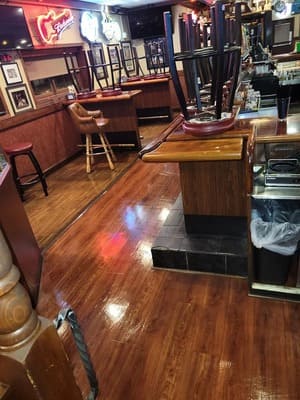
Restaurant cleaning splits into front of house (dining floors, restrooms, entry, glass) and back of house (kitchen floors, hood and grease zones, walk-in exterior, prep areas), and both have to clear the Florida health-code bar. Our humid climate and year-round warmth raise the pest and mildew pressure, so grease control and floor degreasing are not just about appearance, they are about passing inspection and keeping the place pest-free. The dining room is your reputation; the kitchen is your license. Call (908) 902-1178.
Two Worlds Under One Roof
A New Port Richey restaurant is two cleaning environments with two different stakes. The front of house is your reputation: a customer judges the place on the dining room floor, the table, the restroom, and the entry. The back of house is your license: the kitchen has to clear the health inspector’s standard or the doors do not open. A cleaning program has to take both seriously, because a spotless dining room over a failing kitchen is a restaurant about to have a very bad day.
Florida raises the stakes on the kitchen side. Warmth and humidity year-round mean grease, food residue, and standing moisture turn into pest attractant and mildew faster than they would in a cooler climate. Roaches, flies, and rodents follow grease and food, and a Florida health inspector knows it. That is why the back-of-house grease and floor program is not optional housekeeping, it is the front line of staying open. Seven years in the Army and a stretch as a Military Police Investigator drilled the same lesson restaurant cleaning teaches: the detail you skip is the one that fails the inspection.
Front of House Standards
Dining floors. Restaurant dining floors take spills, dropped food, and heavy traffic, and they show it. Hard floors get swept and degreaser-mopped nightly, with periodic deep scrubbing or strip-and-wax depending on the floor type. Carpet, where present, gets vacuumed nightly and extracted on a schedule, because a restaurant carpet holds food and odor. Tile-and-grout floors need periodic deep cleaning, because grout traps grease and grime that a mop just spreads.
Restrooms. Restaurant restrooms are held to the highest standard there is, because a dirty restroom in a restaurant tells the customer exactly what they fear about the kitchen they cannot see. Multiple checks during service, full sanitization, never out of paper, fixtures detailed, floors mopped, mirrors streak-free. This is non-negotiable.
Entry and glass. The entrance and front windows are the first impression. Glass kept clean (and in our market, watched for the salt-air film and storm spotting), entry floors and mats maintained, and the host area reset. A clean front says the whole operation is clean.
Back of House: Grease and Floors
The kitchen floor is the single most important back-of-house surface. Grease builds up on it, around the cook line, the fryers, and the prep stations, and a greasy floor is both a slip hazard and a health-code problem. We use a degreaser-based program: high-alkaline degreaser applied to the grease zones, agitated with a deck brush or scrubber, and the slurry removed rather than mopped around. Floor drains get attention so they do not back up, and the grout in tile floors gets periodic deep cleaning because grease lives in the grout lines.
Hood and grease zones. The exhaust hood and the surfaces around it accumulate grease that is both a fire risk and an inspection item. We handle the cleaning of the hood exterior and surrounding surfaces as part of the program (the interior duct and certified hood-system cleaning is a specialized, separately scheduled service, and we coordinate with a certified vendor for that). The walk-in cooler exterior, the surfaces around prep stations, and the equipment exteriors get the degreasing and sanitizing that keeps the kitchen clear of buildup.
Florida Health Code, Humidity, and Pests
Florida restaurants are inspected against the state food-safety standard, and cleanliness is central to it. The factors that fail inspections, grease buildup, dirty floors and drains, pest evidence, and unsanitary restrooms, are exactly the things a strong cleaning program prevents. In our climate, the pest pressure is constant: the warm, humid environment means roaches and flies are always looking for a way in and a reason to stay. Removing the grease and food residue that draws them is the cheapest pest control there is. We coordinate with the restaurant’s pest-control vendor so the cleaning and the pest program reinforce each other rather than working at cross purposes.
Humidity also drives mildew in the wet zones, dish areas, mop sinks, walk-in seals, restroom corners, so we keep a mildew watch on those surfaces. Catching it early keeps it off the inspector’s list and out of the dining room air.
Scheduling and Cost
Restaurant cleaning runs on a nightly schedule after close, with deep-clean items (floor degreasing, grout, hood surrounds, equipment detail) on a rotating cycle. Pricing depends on the size of the dining room and kitchen, the floor types, and how heavy the grease load is, a high-volume fryer-heavy kitchen needs more degreasing than a light-prep cafe. We walk the restaurant, look at both sides of the house, and give a flat quote against your hours and your inspection needs. Contact us for a free walkthrough and we will tell you what it’ll cost to keep your dining room and your kitchen inspection-ready.
New Port Richey Restaurant Cleaning FAQ
Do you clean the kitchen as well as the dining room?
Yes. We handle both: front of house (dining floors, restrooms, entry, glass) and back of house (kitchen floor degreasing, drains, walk-in exterior, prep and equipment surfaces, hood exterior). Certified interior hood-system cleaning is a specialized service we coordinate with a certified vendor.
How do you handle kitchen grease?
A degreaser-based floor program: high-alkaline degreaser applied to the grease zones, agitated with a deck brush or scrubber, and removed rather than mopped around. We also keep the drains clear and deep-clean the grout where grease lives. Removing grease is also the cheapest pest control there is.
Will your cleaning help us pass health inspection?
A strong cleaning program prevents the exact things that fail Florida inspections: grease buildup, dirty floors and drains, pest evidence, and unsanitary restrooms. We clean to that standard nightly and rotate the deep-clean items so the kitchen stays inspection-ready.
How does Florida’s climate affect restaurant cleaning?
Year-round warmth and humidity raise the pest and mildew pressure. Grease and food residue draw roaches, flies, and rodents faster here, and the wet zones grow mildew quickly. We remove the attractants and keep a mildew watch, and we coordinate with your pest-control vendor.
Can you clean after we close?
Yes. Restaurant cleaning runs nightly after close, with deep-clean items on a rotating cycle. We schedule around your hours so the work happens when the kitchen and dining room are empty.
What does restaurant cleaning cost?
It depends on the size of the dining room and kitchen, the floor types, and the grease load. We walk both sides of the house and give a flat quote against your hours and inspection needs, so you know what it’ll cost.
Need Restaurant Cleaning in New Port Richey?
Front of house and back of house held to the Florida health-code bar, with grease and pest pressure handled. Veteran-owned, nightly service, 24/7 owner access.
Free Walkthrough (908) 902-1178